I read "Do Androids Dream of Electric Sheep" by Philip K. Dick.
I thought it was entertaining! Really brilliant concepts, I love how this was the genesis of Blade Runner, I can see the clear inspo. I do think the book is a bit better for being shorter while conveying the same thing 😅
One thing that made me feel gross was every time a woman appeared in the book, the author kept going on about her breasts. Not very cool at all.
#book #books #booksky #bookstodon #reading #readingcommunity
I have just finished reading "A Sea of Unspoken Things" by Adrienne Young (review link below) and have moved on to Tomi Adeyemi's "Children of Blood and Bone" which is a cracking fantasy novel in a dystopian world.
#wwwWednesday #books #BookReview #BookCommunity #Bookstodon
thomasrigby.com/posts/book-review-a-sea-of-unspoken-things-adrienne-young/
Finished reading The Wasp Trap.
I enjoyed it, but it's flawed.
The Good: page turner, kept me guessing, villain reveal was satisfying, epilogue while short was satisfying.
The Bad: MMC grossed me out, cryptic clues go nowhere, first 10-15 chapters are a slog, villain defeat is hilariously bad, story isn't really gripping.
3.5/5
#books #booksky #bookstodon #book #reading #readingcommunity
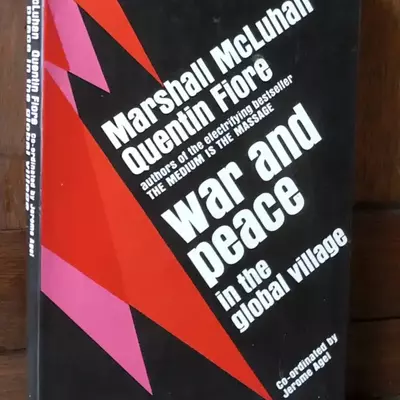
1. Look around you on every social media platform in USA
2. People SHOULD BE and COULD BE promoting the 2017 book by #DrBandyXLee Dr. Bandy X. Lee
3. "Dr. Lee was correct in year 2017 and we all should have gotten on the same page" - please keep repeating...
https://en.wikipedia.org/wiki/The_Dangerous_Case_of_Donald_Trump
Looking for FREE* sci-fi and fantasy ebooks? Check out this Bookfunnel event - 181 (!!!) authors brought you their best!
PS: there's an excerpt of my YA novel in there 🙂
https://bf.sophiemaddon.com/marchfantasyscififreebies/4bvklr7jyr
#freebooks #free #ebooks #books #bookstodon #scifi #scifibooks #dystopia #dystopianSciFi #fantasy #sff #fantasybooks
*free with newsletter sign-up

#Book review: The Feminist Art of Walking (Morag Rose, Pluto Press, 2025).
📍 https://thesociologicalreview.org/reviews/the-feminist-art-of-walking-by-morag-rose/
“At the outset, Rose adopts a cautious stance toward famous walking figure of the flâneur, urban wanderer. Rose calls out how the notion of the flâneur has historically been “male, wealthy and able-bodied."
She calls on us to consider how walking can function as activism, weaving together histories, memories and the present within urban landscapes.”
LocalSend tem agora um plugin para o KOReader!
O LocalSend é um app multiplataforma que permite transferência de arquivos entre aparelhos que estão na mesma rede Wi-Fi. Basta dar um nome para seu dispositivo e aceitar a transferência quando alguém te enviar algo.
Com este plugin, seu e-reader consegue tanto receber quanto enviar arquivos. E, como o LocalSend permite o envio da área de transferência (clipboard), você também pode enviar seu "Ctrl+V" para o KOReader.
Isto pode ser útil para ler um texto "solto" que não está em .ePub e nem salvo em arquivo. Por exemplo: um trecho de artigo longo, basta selecionar, copiar e colar no LocalSend. Será criado no KOREader um arquivo apenas com aquele trecho, no formato .txt.
Abaixo o repositório oficial e um tutorial em vídeo do "embaixador" do KOReader no Youtube, Stefan Svartling:
- [localsend.koplugin - GitHub](https://github.com/kaikozlov/localsend.koplugin)
- [How to install LocalSend KOReader plugin and send and receive files wirelessly on your e-reader - Stefan Svartling - YouTube](https://www.youtube.com/watch?v=3F4jSLoj8xM)
#LocalSend #KOReaderPlugin #KOReader #ereader #StefanSvartling #books #ebooks #FileTransfer #Kindle #Kobo
This week I’ll be offering my novel, HUMAN, for free on itch.io. I would encourage folks to support itch.io, an open marketplace for independent digital creators that doesn’t exploit artists or customers. HUMAN will remain on itch.io at a lower price than at other retailers after this free offering. I hope you enjoy it.
https://bretthodnett.itch.io/human
A remarkable exploration of family, society, and what makes us human, HUMAN will take you from the post-apocalyptic world of the near future, to the two very different societies that emerge 15 million years later, where those few surviving individuals have evolved to become something that we might not fully recognize as human.
When Ayla’s research takes her to a remote river in Canada’s far north, Chris brings their daughter to an isolated island in the southern Pacific. Though at opposite ends of the earth, they both awaken one morning to black skies, and a night that doesn’t end. Slowly, Ayla and Chris begin to realize that humanity has been inexplicably wiped out, and only their isolation has saved them. Besides the handful of people around them, they are now alone in the world. As they struggle to build new ways to live, they must also struggle with how to let go of their past.
Millions of years later, when their descendants finally meet, they have evolved to become two very different kinds of humans, with two very different civilizations. As each tries to build a better world for themselves, navigating love, loss, betrayal and success within their own societies, their biggest challenge may be to recognize the humanity of the other.
#HUMAN #WhatToRead #BookBlog #Readers #BrettHodnett #SpeculativeFiction #SciFi #WritersOfMastodon #SFF #SF #ScienceFiction #Author #Writer #Writers #Books #Livres #Bookstodon #BookCover #HumanEvolution #PostApocalypse #ApocalypticFiction #Evolution #EPUB #Ebook #FreeBook #FreeBooks #GiveAway #Apocalypse #FediHuman
I've recently read "Vertigo: The Rise and Fall of Weimar Germany" by Harald Jähner.
Specialists with a good knowledge of the political history of interwar Germany will probably agree with the criticisms of leading historian Richard Evans in his 29/11/ 24 TLS review, in which he notes the failure of the book to address important aspects of the republic's politics such as the nature of the constitution.
Evans goes on to criticise "Vertigo" as being overly focused on Berlin and its culture of modernity and its neglect of rural and small town Germany.
For a cultural history, though, this emphasis on Berlin is justified, because that metropolis was offering novel aspirations, norms, and ways of living for the country as a whole, even if the reaction to that agenda in much of rural Germany was one of suspicion, resentment, and finally hatred. One rural commentator Jähner quotes noted with bitterness the exodus of women to the city, "the mass grave of the German people", attracted as they were by "greed, by pleasure seeking, by hollow noise in every area of life, by noisy oriental Jewish nonsense in state politics, department stores and theatres."
I would guess that the these seductive possibilities were made known throughout the German speaking world by the mostly Berlin based media of cinema and the illustrated press. Even if the overwhelming majority of Germans neither actively participated in the new forms of art and entertainment flowering in Berlin nor experimented with new metropolitan practices and presentations in sex and gender, the very existence of this new culture could not do other than transform cultures beyond the metropolis, even if only by introducing within them a self-conscious note of antiurban antimodernity.
Jähner, a journalist, has a good feel for both aspects of everyday life that might pass unnoticed by too many historians, such as the yoyo craze of 1932, and also for the disparate and sometimes internally contradictory emotions, moods, and feelings underlying the republic's culture.
Although "Vertigo" is neither comprehensive nor unquestionable in its treatment of Weimar Germany , it is a rich and thoroughly readable resource for non-Germanists like me, and notable for its determination to treat the culture of the republic as worthy of examination and perhaps celebration in its own right, as opposed to being merely an interlude leading to the advent of the Third Reich.
#Books #History #Germany #WeimarRepublic #Vertigo #20thCentury #InterwarHistory #Modernity #HaraldJähner #CulturalHistory
Subscribe to #books entries via RSS feed